Address
API Trio Tower - Office No. 1805 - Al Barsha First - Al Barsha - Dubai
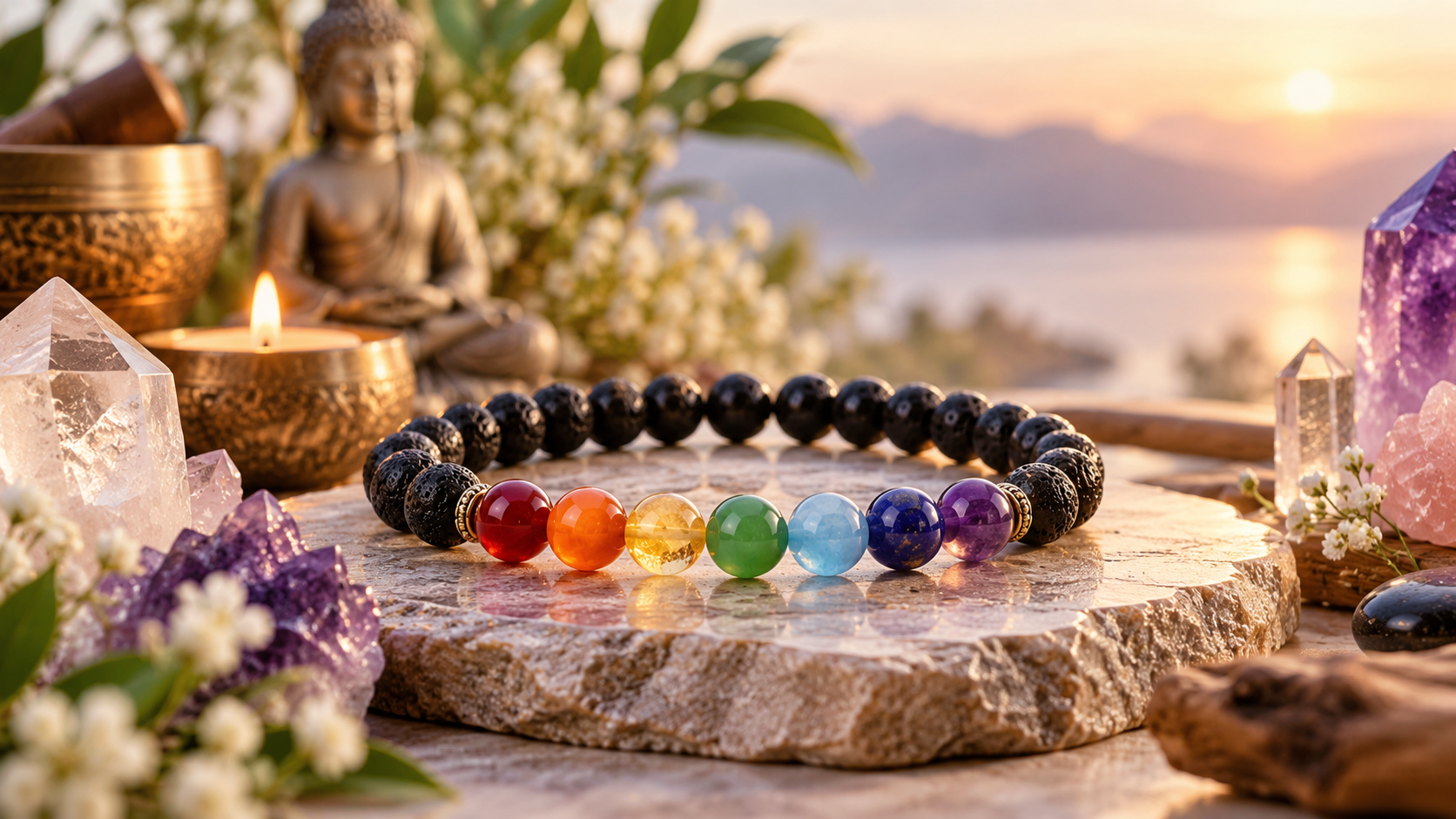
A chakra bracelet is a string of seven gemstone beads, each one chosen to represent one of the body’s seven main energy centres. Rooted in ancient Indian spiritual traditions, chakra bracelets have become one of the most popular pieces of crystal jewellery worldwide. People wear them as a daily reminder to stay balanced, grounded and mindful.
But how exactly do chakra bracelets work, and what does each stone stand for? This guide breaks down the meaning of all seven chakras and explains how to choose and wear a bracelet with intention.
The word “chakra” comes from Sanskrit and means “wheel.” In yogic philosophy, the body has seven spinning wheels of energy running from the base of the spine to the crown of the head. Each chakra is linked to specific emotions, qualities and areas of life.
According to this tradition, when energy flows freely through all seven centres, you feel calm, confident and connected. When one chakra is blocked or overactive, you may feel out of sync in the area it governs.
Chakra bracelets bring these ideas into something you can wear. Each bead is a crystal whose colour and traditional properties match one chakra. Wearing all seven together is believed to support overall balance. Many people also use the bracelet as a mindfulness tool, touching each bead during meditation or a moment of reflection to set an intention.
It’s worth noting that chakra bracelets are a spiritual and wellness practice, not a medical treatment. Their value lies in the intention, focus and sense of calm they help you cultivate.
Located at the base of the spine, the root chakra is your foundation. It governs stability, security and your sense of belonging. Its colour is red, and it is commonly represented by red jasper, garnet or black onyx.
Sitting just below the navel, the sacral chakra is the centre of creativity, pleasure and emotional flow. Its colour is orange, and carnelian is the most popular stone for this bead.
Found in the upper abdomen, the solar plexus chakra rules confidence, willpower and personal power. Its colour is yellow, typically represented by tiger’s eye or citrine.
At the centre of the chest, the heart chakra connects the lower and upper chakras. It is associated with love, compassion and forgiveness. Its colour is green, and green aventurine or jade are the usual choices.
The throat chakra governs communication, honesty and self-expression. Its colour is blue, often represented by sodalite, lapis lazuli or blue lace agate.
Positioned between the eyebrows, the third eye chakra is linked to intuition, insight and clarity of thought. Its colour is indigo, and lapis lazuli or sodalite are common picks.
At the top of the head, the crown chakra represents spiritual connection and higher awareness. Its colour is violet or white, typically represented by amethyst or clear quartz.
Look for genuine natural stones rather than dyed glass or plastic beads. Real crystals have subtle variations in colour and pattern, and a reputable seller will clearly state the materials used.
There is no single “correct” wrist, but tradition offers a simple guide. The left hand is considered the receiving side, so wear it there to absorb the qualities of the stones. The right hand is the giving side, often chosen when you want to release energy or project intention outward.
To get the most from your bracelet:
A chakra bracelet is more than an accessory. It is a wearable map of the seven energy centres, each bead a reminder of a quality you want to nurture, from grounding at the root to awareness at the crown. Whether you wear one for its spiritual meaning, as a meditation aid or simply for its colourful beauty, understanding the chakras behind each stone makes it far more personal. Choose genuine crystals, wear your bracelet with intention, and let it serve as a daily prompt to stay balanced in body and mind.